Nuove fotografie / New photos
news&updates | home

Foto nr. 1: Pz.Kpfwg. III Ausf. N della 3. Pz.Sich.Kp. durante dei lavori di riparazione al treno di rotolamento, forse in conseguenza dello scoppio di una mina. Visibile vicino al visore del pilota è il simbolo del reparto, un camoscio (si veda la sezione "Nuove informazioni sui reparti corazzati"); è inoltre parzialmente visibile il numero sul lato della torre, iniziante (come per tutti i mezzi della compagnia) per 3. (Collezione Akira Takiguchi)

Photo nr. 1: Pz.Kpfwg. III Ausf. N of the 3. Pz.Sich.Kp. during repair work on the running gear, perhaps as a consequence of a mine detonation. Near the driver’s visor the unit symbol is visible, a chamois (see the section "New information on the Panzer units"); on the turret side the tank number is partially visible, it starts (as for all vehicles of the company) with a 3. (Collection Akira Takiguchi)


Foto nr. 2: Pz.Kpfwg. III Ausf. N della 3. Pz.Sich.Kp. fotografato probabilmente in Slovenia meridionale o Croazia prima o durante l’ “Unternehmen Wolkenbruch”, ottobre – novembre 1943. Il simbolo del reparto è visibile sul side-car (con lo scudetto circondato da un bordo bianco) e, a malapena, sul retro degli Schürzen di torre del Pz.Kpfwg. III, all’interno dell’attrezzo a V appeso agli scudi. Si notino inoltre le casse sistemate sulle prese d’aria posteriori del cofano motore, visibili anche sulla foto nr. 12. (Collezione Akira Takiguchi)

Photo nr. 2: Pz.Kpfwg. III Ausf. N of the 3. Pz.Sich.Kp. probably photographed in southern Slovenia or Croatia before or during the “Unternehmen Wolkenbruch”, October – November 1943. The unit symbol is visible on the side-car (the shield has a white border) and barely on the back of the tank’s turret Schürzen, inside the V-shaped tool hung to the plates. Note also the stowage boxes mounted above the air intakes on the engine compartment cover plate, also visible on photo nr. 12. (Collection Akira Takiguchi)

Grazie Akira! Visitate il suo interessante sito web:
Thanks Akira! Visit his very interesting website:
http://www.ne.jp/asahi/wwii/panzer/list.htm


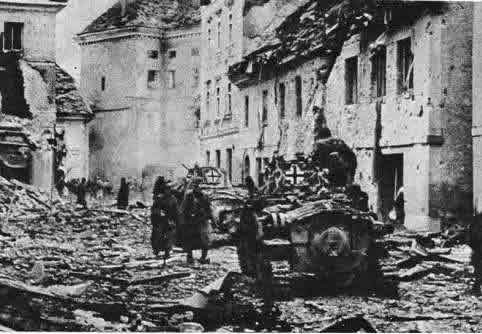
Foto nr. 3: Questa foto, abbastanza conosciuta ma generalmente identificata in maniera errata, mostra una colonna di carri leggeri di produzione italiana L 6 all’interno della cittadina di Kocevje, nella Slovenia meridionale, probabilmente il 12 dicembre 1943. Quel giorno la guarnigione della cittadina, assediata da vari giorni dai partigiani nel castello all’interno del centro cittadino, venne liberata da reparti tedeschi appoggiati dalla 13. (verst.) Pol.Pz.Kp.; non è tuttavia certo che gli L 6 appartenessero a questa unità (si vedano anche le foto nr. 56-59).

Photo nr. 3: This photograph, rather well known but generally not correctly identified, shows a column of Italian-produced L 6 light tanks in the town of Kocevje, in southern Slovenia, probably on 12th December 1943. On that day the town garrison, that for several days had been encircled by the partisans in the castle in the town center, was relieved by German units supported by the 13. (verst.) Pol.Pz.Kp. It is however not certain that the L 6 belonged to that unit (see also photos nr. 56-59).


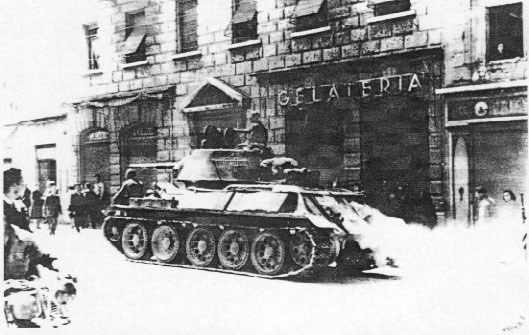
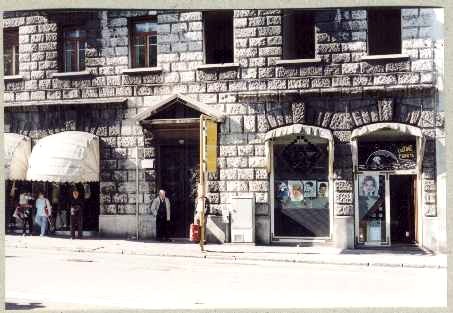
Foto nr. 4: T-34/76 mod. 1943 fotografato a Trieste all’inizio di maggio 1945, in piazza Garibaldi, con equipaggio jugoslavo. Si tratta con ogni evidenza dello stesso veicolo della foto nr. 176; la Balkenkreuz è stata cancellata e sostituita con una bandiera tricolore jugoslava, con una stella rossa all’interno della banda bianca, utilizzata anche da altri mezzi di questo reparto (da questa foto la presenza di tale simbolo non è tuttavia molto chiara) ma il numero 01 è rimasto. La cassa laterale è dello stesso tipo di quelle utilizzate da altri T-34 della 5. (verst.) Pol.Pz.Kp. (cfr. Regenberg, Ordnungspolizei, p. 252) e sembra confermare l’appartenenza del T-34 a quel reparto. (Muzej Novejse Zgodovine, 6377/19; foto comparativa: Claudio Pristavec)

Photo nr. 4: T-34/76 mod. 1943 photographed in Trieste at the beginning of May 1945, in Garibaldi Square, with Yugoslav crew. This is evidently the same vehicle shown on photo nr. 176; the Balkenkreuz has been overpainted with the three-colour Yugoslav flag, with a red star on the white strip, as also used by other vehicles of the same unit (from this image the presence of the symbol is however not very clear), but the German number 01 is still there. The side stowage box is similar to those seen on other T-34 tanks of the 5. (verst.) Pol.Pz.Kp. (cfr. Regenberg, Ordnungspolizei, p. 252), and seems to confirm that this tank belonged to that unit. (Muzej Novejse Zgodovine, 6377/19; comparative picture: Claudio Pristavec)


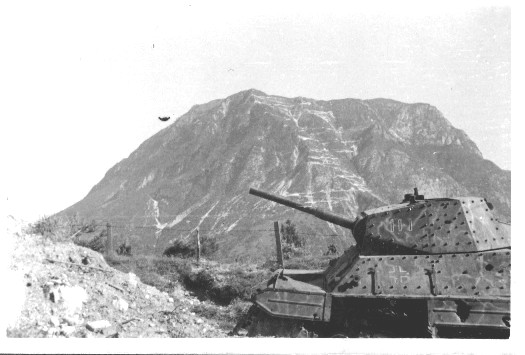
Foto nr. 5: Un'altra foto del P 40 con il Turm-Nummer 111 della Karstjäger Pz.Kp. distrutto ad Ospedaletto sulla strada statale Pontebbana, presa da un soldato neozelandese di passaggio (cft. Foto nr. 174). Sullo sfondo il monte San Simeone, tra la strada e la montagna scorre il fiume Tagliamento. (Collezione Jeff Plowman)

Photo nr. 5: Another photograph of the P 40 with Turm-Nummer 111 of the Karstjäger Pz.Kp. destroyed in Ospedaletto on the State road "Pontebbana", taken from a passing-by New-Zealand soldier (see Photo nr. 174). In the background the mount San Simeone; between the road and the mountain flows the Tagliamento river. (Jeff Plowman collection)

Foto nr. 6: Questa foto è stata scattata in un deposito di materiale catturato vicino a Udine da un soldato della 1st Heavy Recovery Section, appartenente alla 2. New Zealand Division, poco dopo la fine della guerra. Mostra due Pz.Kpfwg. III Ausf. N, uno Sturmgeschütz IV e un paio di Kettenkrad (i cui rimorchi, senza ruote, sono ugualmente visibili).
I due Pz.Kpfwg. III appartenevano molto probabilmente al Pz.Abt. 212 che all’inizio di aprile 1945 aveva ca. 40 Pz.Kpfwg. III Ausf N e combattè contro gli Alleati nella zona di Udine, perdendovi numerosi mezzi (vedi "Nuove informazioni sui reparti corazzati", punti 1 e 8).
Lo Sturmgeschütz IV apparteneva probabilmente al Pz.Abt. 190 della 90. Pz.Gren.Div., che (con la 34. Inf.Div.) era l’unica unità equipaggiata con questo mezzo in Italia. Mentre la 34. Inf.Div. si arrese in Piemonte, la 90. Pz.Gren.Div. depose le armi nel Trentino ma sue parti possono essere arrivate fino alla zona di Udine. Interessanti su questo veicolo sono la piastra corazzata di protezione addizionale davanti alla postazione del pilota e la protezione addizionale di cemento davanti alla casamatta sulla destra del cannone; entrambi queste modifiche erano relativamente comuni e sono constatate anche su veicoli di altri reparti (tra cui anche la 34. Inf.Div.) su diversi fronti. (collezione Jeff Plowman)

Photo nr. 6: This photo, taken near Udine by a soldier from the 1st Heavy Recovery Section of the 2. New Zealand Division at a captured equipment depot not long after the end of the war, shows two Pz.Kpfwg. III Ausf. N, a Sturmgeschütz IV and a couple of Kettenkrad (two trailers, without wheels, are also visible).
The two Pz.Kpfwg. III most probably belonged to Pz.Abt. 212, which in early April 1945 still had around 40 Pz.Kpfwg. III Ausf N and saw combat against the Allies in the Udine region, losing there several tanks (see also "New information on Panzer units", point 1 and 8).
The Sturmgeschütz IV probably belonged to Pz.Abt. 190 of 90. Pz.Gren.Div., which (toghether with the 34. Inf.Div.) was the only unit on the Italian front to be equipped with this kind of vehicle. Whereas the 34. Inf.Div. surrendered in north-western Italy, 90. Pz.Gren.Div. surrendered in the Trentino region but some of its parts may well have ended up near Udine. Interesting on this assault gun is the additional armoured plate in front of the driver’s position and the concrete protection on the right of the main gun; both additions where rather common and were also seen on vehicles from other units (among which also the 34. Inf.Div.) on different fronts. (Jeff Plowman collection)


Imboscata a una colonna tedesca presso Dobraule (Slovenia) il 31 maggio 1944

Il 31 maggio 1944 una piccola colonna motorizzata tedesca, diretta da Gorizia verso Aidussina (oggi Ajdovšcina, in Slovenia), cadde in una imboscata partigiana tesa da combattenti della Kosovelova Brigada all’altezza del paese di Dobraule di Santa Croce (oggi Dobravlje).
Un carro armato M 14/41 e un motocicista, che formavano un distaccamento avanzato, vennero attaccati ma riuscirono a passare indenni (colpi di fucilone controcarro non riuscirono a penetrare le corazze) e a proseguire verso Aidussina.
Due camion blindati, sopraggiunti poco dopo con un secondo motociclista, vennero centrati dal fuoco partigiano: uno prese subito fuoco, l’altro tentò di invertire la marcia ma venne catturato e incendiato dai partigiani. Almeno 5 soldati degli equipaggi dei camion bindati vennero uccisi, come anche il secondo motociclista.
Subito dopo la conclusione di questo scontro riapparve dalla direzione di Aidussina il carro armato, che tornava sui suoi passi nell’intenzione di prestare soccorso ai veicoli bloccati. Subito dopo il paese di Cesta il carro armato finì però su una mina che causò la rottura di un cingolo; abbandonato dall’equipaggio, il mezzo venne incendiato dai partigiani dopo il recupero delle mitragliatrici e delle munizioni.
Sulla base di nuove informazioni è certo che l'M14/41 apparteneva al Gruppo corazzato San Giusto; due membri dell'equipaggio morirono nel corso dell'azione.
(Tutte le foto riprodotte qui sotto sono tratte dal volume: Radosav Isakovic, Kosovelova Brigada, Ljubljana , 1973).

Ambush to a German column near Dobravlje (Slovenia), 31st May 1944

On 31st May 1944 a small German column, driving from Gorizia to Aidussina (today Ajdovšcina, in Slovenia) was ambushed by partisans of the Slovenian Kosovelova Brigada near the village of Dobraule di Santa Croce (today Dobravlje).
An M 14/41 tank and a motorcyclist, which formed an advanced detachment, were attacked but managed to drive on unharmed towards Aidussina (anti-tank rifle shots were fired but did not penetrate the tank’s armour).
Two armoured trucks that were driving a little behind with another motorcyclist were hit by the partisans’ fire: one caught fire, the other tried to turn back but was captured and set on fire by the partisans.
A few moments after the conclusion of this fight, from the direction of Aidussina the M 14/41 tank reappeared, coming back in order to help the other vehicles. Just outside the village of Cesta the tank drove onto a mine that broke up a track. Abandoned by its crew, the tank was set on fire by the partisans, after they had recuperated the machine-guns and the ammunitions.
On the basis of new infirmation it is now certain that the M 14/41 belonged to the Italian tank unit Gruppo corazzato San Giusto; two crew members died in the fighting.

(All photos reproduced below are taken from the book: Radosav Isakovic, Kosovelova Brigada, Ljubljana, 1973).


Due foto dell’M 14/41 del Gruppo corazzato San Giusto saltato su una mina tra Cesta e Dobraule, scattate dai partigiani della Kosovelova Brigada; si tratta dello stesso veicolo raffigurato sulla foto nr. 132. Più in basso: alcune foto comparative attuali, la terza si riferisce alla foto nr. 132.

Two photos of the M 14/41 of the Gruppo corazzato San Giusto damaged by a mine between the villages of Cesta and Dobravlje, taken by the partisans of the Kosovelova Brigada. It is the same tank as on photo nr. 132. Further down the page: some comparative photos, the last one refers to photo nr. 132.


Tre foto del camion blindato (si tratta di un Fiat 665 NM) catturato e poi incendiato dai partigiani jugoslavi presso Dobraule. La prima è riprodotta nel libro come foto nr. 114; va quindi rettificata la data del 16 maggio 1944 indicata (sulla base dei dati - errati - dell’archivio fotografico) nella didascalia. Più in basso: una foto comparativa attuale (fonte: Claudio Pristavec).

Three photos of the armoured truck (a Fiat 665 NM) captured and later set on fire by Jugoslav partisans near Dobravlje. The first photo is to be found in the book as nr. 114; the date of 16th May 1944 indicated there (on the basis of incorrect original archive indications) must therefore be corrected. Further down the page: a comparative picture (source: Claudio Pristavec).